
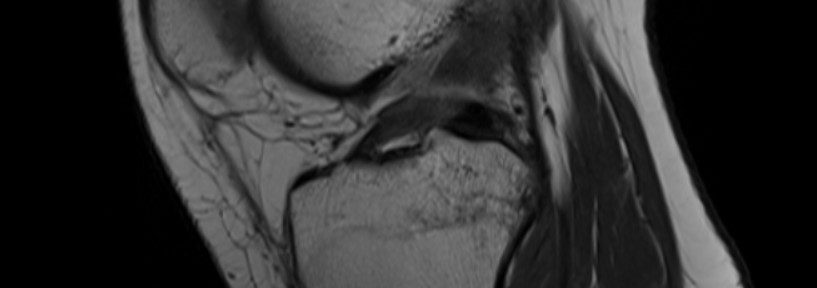
This page presents Case 43: a 50-year-old Greek woman living in the Netherlands who sustained a complete rupture of the left anterior cruciate ligament while skiing. She did not undergo surgery. With Evo-Devo Exercises she restored ligament continuity, and the follow-up MRI demonstrated a native anterior cruciate ligament ACLOAS score of 1.
ACL Online Therapy for natural healing
The case reports of ACL natural healing
Patient information:
- Profile: Female, 50 years old; Greek, residing in the Netherlands
- Date of injury: March 2, 2023
- Mechanism: While getting off a ski lift, the skis crossed on landing; the knees fell into a “snowplow” (valgus) position and the left knee twisted. She was transported to the hotel by snowmobile.
- Initial care: About 3 hours post-injury she visited a hospital. X-ray: no fracture. Manual test: Lachman positive.
Initial assessment and plan:
- First MRI: March 22, 2023. Local report: “injury of the left anterior cruciate ligament; partial tear cannot be excluded.”
- Local physiotherapy (before switch): From Mar 2 to Mar 17: leg press, knee extension exercises, jump drills, stair climbing.
- Switch to our protocol: From March 17, online care with Jun Matsumoto Clinic, starting Evo-Devo Exercises. The previous regimen (full knee extension work, jumping, etc.) was discontinued.
Treatment details:
- Brace management: Knee brace for 3 months with 0–30° extension limitation (avoid full extension).
- Activity restriction: Walking limited to ≤1,000 steps/day.
- Exercise therapy: Home-basedEvo-Devo Exercises 3 times/day.
- Late phase: After 3 months the brace was removed; gradual re-introduction of full extension range and strength training.
First MRI and Ihara classification:
Three independent imaging specialists re-read the first MRI: Ihara classification “Type II in two readers, Type III in one.”
[Ihara classification notes] I: linear tear; II: curved tear (simple complete rupture); III: tear with displaced stumps; IV: indistinct/unclear stumps.

Follow-up MRI (~3 months) and ACLOAS:
After 3 months of Naturalization Therapy (Evo-Devo Exercises), a follow-up MRI was obtained. All three readers rated the native anterior cruciate ligament as ACLOAS score 1.
[ACLOAS (native anterior cruciate ligament) notes] 0 = normal (low signal, regular thickness and continuity) / 1 = thickened and/or intraligament high signal, but shape and continuity are normal / 2 = thinned or elongated but continuity preserved / 3 = defect or complete loss of continuity.

Clinical course:
Because the pre-switch program included full-extension drills, jumping and stair training, deterioration was initially a concern. However, with extension limitation, brace management and Naturalization Therapy (Evo-Devo Exercises), imaging achieved ACLOAS 1 (best-tier natural healing). Daily activities were comfortable, and subjective stability improved.
Discussion:
This case likely benefited from a predominantly Ihara Type II (simple complete rupture) pattern and a relatively early switch to our protocol, leading to a favorable endpoint of ACLOAS 1. High-load early exercises can hinder stump apposition; an early shift to 0–30° extension limitation with brace control and continued Evo-Devo Exercises likely promoted restoration of ligament continuity.
Summary:
- 50-year-old Greek woman living in the Netherlands with a complete rupture of the left anterior cruciate ligament.
- Ihara classification: Type II (two readers) / Type III (one reader); pattern favored a simple complete rupture.
- Three months of 0–30° extension limitation + brace management + Evo-Devo Exercises.
- Follow-up MRI: all readers ACLOAS 1—a best-tier natural healing finding.
References:
- Filbay SR, et al. Healing of acute anterior cruciate ligament rupture on MRI and outcomes following non-surgical management with the Cross Bracing Protocol. Br J Sports Med.
- Ihara H, Kawano T. Influence of Age on Healing Capacity of Acute Tears of the Anterior Cruciate Ligament Based on MRI Assessment. J Comput Assist Tomogr.
- Roemer FW, et al. ACLOAS: Longitudinal MRI-based whole joint assessment of anterior cruciate ligament injury. Osteoarthritis Cartilage.
Leave a Reply